 EN
EN

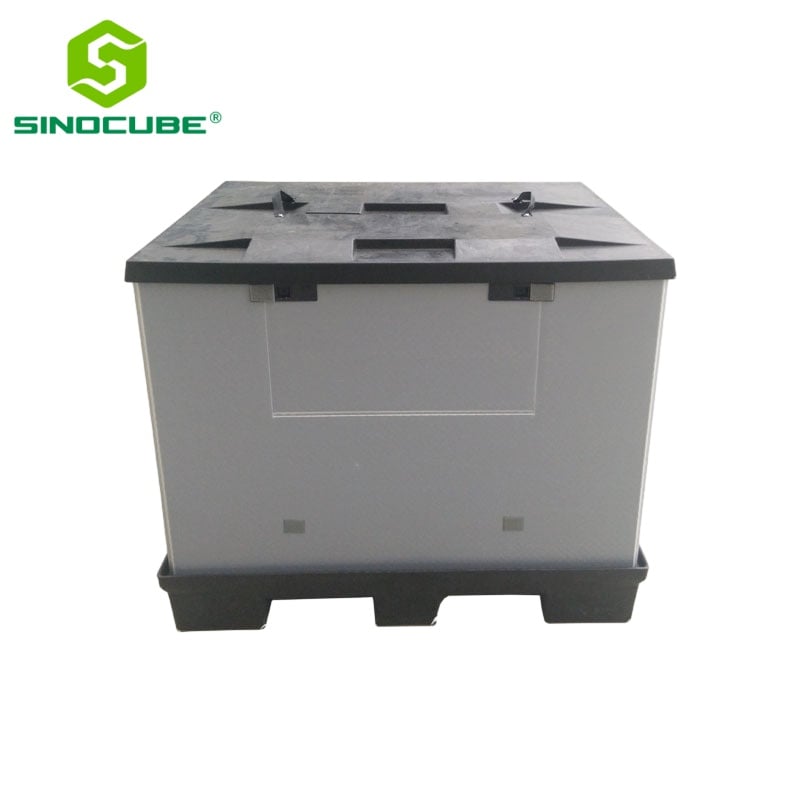
The logistics and supply chain industry faces constant pressure to reduce costs, improve efficiency, and meet sustainability goals simultaneously. Plastic containers have emerged as the dominant solution for reusable logistics packaging, fundamentally transforming how businesses manage goods movement across warehouses, distribution centers, and retail networks. This shift toward plastic containers reflects a strategic recognition that modern logistics requires packaging solutions that balance operational performance with environmental responsibility.

Understanding why plastic containers have become the preferred choice requires examining the specific advantages they deliver across durability, cost structure, operational flexibility, and environmental impact. The transition from single-use cardboard to reusable plastic containers represents one of the most significant packaging innovations in logistics history, fundamentally reshaping supply chain economics and sustainability outcomes across industries.
Superior Durability and Reusability Economics
Extended Lifecycle Performance of Plastic Containers
Plastic containers significantly outperform traditional cardboard packaging in terms of lifecycle durability and reuse cycles. A single plastic container can withstand hundreds of complete logistics cycles—loading, transportation, unloading, cleaning, and reloading—while maintaining structural integrity and dimensional stability. This extended usable lifespan transforms the cost-per-use calculation fundamentally, making plastic containers the economically superior choice over time. Organizations implementing plastic containers typically recover their initial investment within 18 to 24 months through reduced packaging replacement costs alone, before considering additional operational savings.
The material science behind modern plastic containers ensures consistent performance across extreme temperature variations, humidity fluctuations, and mechanical stress typical in logistics environments. Plastic containers resist moisture absorption, maintaining their shape and strength whether stored in cold warehouses, heated distribution centers, or outdoor staging areas. This environmental resilience eliminates the degradation challenges that plague cardboard solutions, which deteriorate rapidly when exposed to moisture, temperature swings, or repeated handling cycles.
Reduced Replacement Frequency and Waste Elimination
By extending the useful life of each individual container through hundreds of reuse cycles, plastic containers dramatically reduce the total packaging units required to maintain logistics operations. Companies transitioning to plastic containers typically experience 60 to 70 percent reductions in annual packaging procurement volume compared to equivalent single-use cardboard systems. This reduction directly translates into lower material costs, reduced warehouse space for packaging inventory, and simplified supply chain planning. The cumulative effect of fewer replacement cycles means plastic containers generate substantially less landfill waste than disposable alternatives, aligning with both cost reduction and environmental stewardship objectives.
Plastic containers also eliminate the hidden costs associated with damaged packaging disposal and replacement in mid-supply-chain scenarios. When cardboard boxes degrade during transport or deteriorate in storage, they must be replaced immediately to prevent product loss or quality degradation. Plastic containers, by contrast, maintain their protective function consistently, virtually eliminating scenario costs where packaging failure requires emergency replacement during distribution cycles.
Operational Efficiency and Supply Chain Optimization
Standardization and Dimensional Consistency
Plastic containers enable unprecedented standardization across supply chains because each unit maintains exact dimensional consistency across hundreds of reuse cycles. This geometric precision allows logistics operations to optimize warehouse shelving, pallet configurations, loading patterns, and transportation vehicle utilization with mathematical precision that single-use packaging cannot achieve. When every plastic container maintains identical external dimensions and stack-ability characteristics, facility managers can design storage systems, loading sequences, and vehicle configurations that maximize space utilization by 15 to 25 percent compared to environments using variable-dimension packaging solutions.
The standardized nature of plastic containers also enables seamless integration with automated sorting, scanning, and inventory management systems. Barcode placement, RFID tag mounting, and dimensional tracking all become dramatically more efficient when working with uniform plastic containers rather than variable cardboard boxes. This standardization extends to stacking stability, pallet compatibility, and transportation efficiency metrics that directly impact supply chain performance across every operational node.
Washing, Sanitization, and Reusability Workflows
Modern plastic containers support sophisticated cleaning and sanitization protocols that prepare them for immediate reuse without extended drying times or quality concerns. Industrial washing systems can process hundreds of plastic containers per hour, removing residues and contaminants while maintaining structural integrity and material properties. This cleaning capability fundamentally changes logistics workflows by enabling closed-loop systems where plastic containers move directly from product delivery to industrial washing facilities, then back into active circulation without extended storage or intermediate handling stages.
The hygienic properties of plastic containers make them particularly valuable in food, pharmaceutical, and temperature-sensitive logistics environments where contamination risks demand rigorous sanitation protocols. Plastic containers resist bacterial colonization, absorb no chemical residues, and can withstand high-temperature steam washing cycles that would damage cardboard-based solutions. This capacity for thorough sanitization transforms plastic containers into trusted components of supply chains with strict quality and safety requirements, expanding their application far beyond general merchandise logistics.
Environmental and Sustainability Advantages
Resource Efficiency Through Reuse Economics
The environmental case for plastic containers rests primarily on the dramatic reduction in total material consumption required to sustain logistics operations over multi-year periods. A single plastic container used 500 times requires production of just one-fifth the total material compared to 500 single-use cardboard boxes providing equivalent protective function across an identical operational lifespan. This material efficiency directly reduces manufacturing emissions, transportation carbon footprint associated with packaging procurement, and overall environmental impact per logistics cycle completed. Industry lifecycle assessments consistently demonstrate that plastic containers achieve significantly lower environmental impact profiles than disposable alternatives when measured across their complete operational lifespan.
Plastic containers enable businesses to transition away from constant packaging material procurement cycles that depend on forest resources, bleaching chemicals, and energy-intensive paper manufacturing processes. By consolidating logistics packaging needs into a smaller total inventory of reusable plastic containers, organizations reduce their environmental footprint while simultaneously reducing packaging-related supply chain complexity and procurement costs.
Circular Economy Integration and Recycling Potential
At end-of-life, plastic containers enter robust recycling infrastructure that transforms them into new plastic products, continuing their environmental value delivery through secondary use cycles. Unlike cardboard, which degrades with each recycling iteration and eventually reaches end-of-life status, plastic containers can be processed into new plastic containers or alternative plastic products through established recycling systems. Progressive companies now implement take-back programs where used plastic containers are collected, consolidated, and sent to recycling facilities, creating circular supply chains where packaging material never enters landfill systems.
Many organizations implement plastic container strategies that align with broader corporate sustainability commitments and environmental reporting requirements. By quantifying the reduced material consumption, lower annual waste generation, and recycled content integration enabled by plastic containers, companies can demonstrate measurable environmental progress against sustainability targets while simultaneously improving logistics cost structures and operational efficiency metrics.
FAQ
What specific industries benefit most from transitioning to plastic containers for reusable logistics?
Plastic containers deliver particular value in food and beverage distribution, pharmaceutical logistics, automotive parts supply chains, retail e-commerce fulfillment, and cold chain management operations. These industries face strict quality requirements, temperature sensitivity demands, and high-volume logistics flows where the durability, hygiene, and standardization benefits of plastic containers generate the strongest return on investment. Temperature-sensitive operations particularly benefit because plastic containers maintain integrity across thermal extremes that would compromise cardboard alternatives.
How does the initial capital investment in plastic containers compare to ongoing cardboard packaging costs?
While plastic containers require significant upfront capital investment typically ranging from 40 to 80 percent of annual cardboard packaging expenditures, this investment recovers within 18 to 24 months through eliminated replacement costs, reduced procurement volume, and operational efficiency gains. After the payback period, logistics organizations typically experience 50 to 70 percent reductions in annual packaging-related expenses compared to single-use cardboard systems. The financial analysis becomes increasingly favorable over time as inflation increases cardboard packaging costs while plastic container maintenance expenses remain relatively stable.
Can plastic containers integrate with existing logistics management systems and warehouse automation?
Plastic containers integrate seamlessly with modern warehouse management systems, barcode scanning infrastructure, RFID tracking technology, and automated sorting equipment because their standardized dimensions and consistent properties enable precise system calibration. The dimensional uniformity and stable tracking characteristics of plastic containers often improve automation system performance compared to variable-dimension cardboard boxes. Organizations can typically implement plastic containers within existing facility infrastructure with minimal software modifications or equipment adjustments.
Table of Contents
- Superior Durability and Reusability Economics
- Operational Efficiency and Supply Chain Optimization
- Environmental and Sustainability Advantages
-
FAQ
- What specific industries benefit most from transitioning to plastic containers for reusable logistics?
- How does the initial capital investment in plastic containers compare to ongoing cardboard packaging costs?
- Can plastic containers integrate with existing logistics management systems and warehouse automation?