 EN
EN

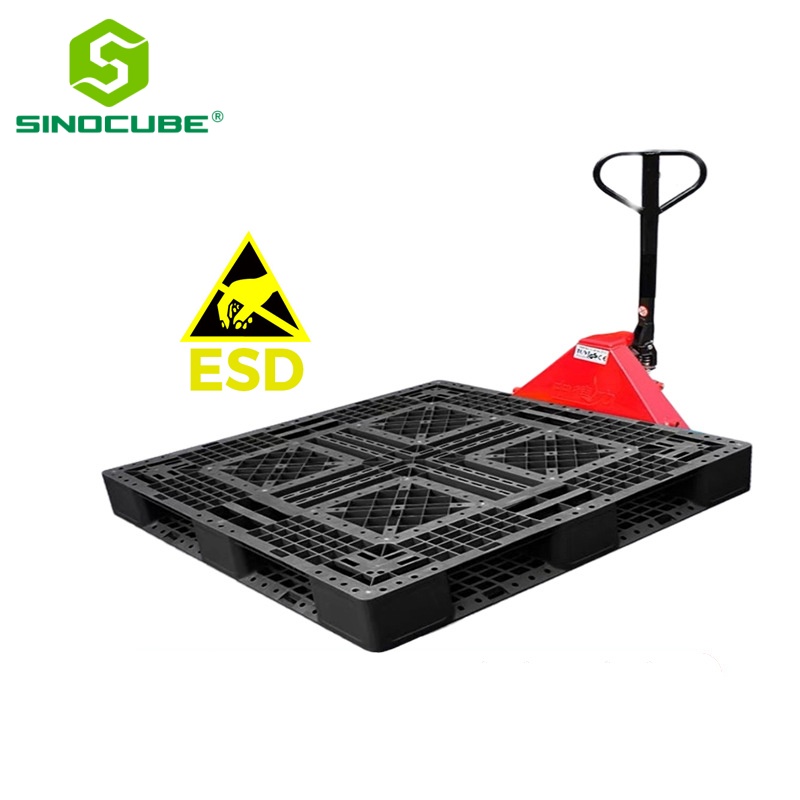
Pallets have become the backbone of contemporary warehousing and distribution systems worldwide. Whether managing inventory across a single facility or coordinating shipments across global supply chains, organizations rely heavily on pallets to optimize operational efficiency, reduce handling costs, and maintain inventory organization. Understanding why pallets are essential components reveals critical insights into modern logistics strategy and warehouse design. The adoption of standardized pallets transforms how businesses handle, store, and transport goods, making them indispensable in nearly every industrial and commercial sector.

The importance of pallets extends beyond simple storage; they represent a fundamental shift in how supply chains operate. Modern warehousing depends on pallets to facilitate rapid loading and unloading, enable standardized stacking protocols, and support automated material handling systems. When organizations implement proper pallet management strategies, they unlock significant operational advantages including faster order fulfillment, reduced labor demands, and improved inventory visibility. This article explores the multifaceted reasons why pallets have become essential to warehousing infrastructure and why distribution professionals consider them fundamental to competitive logistics operations.
Operational Efficiency and Material Handling
Streamlining Warehouse Movement
Pallets dramatically enhance warehouse operational efficiency by enabling swift material movement throughout facilities. Forklift operators can rapidly transport multiple units of goods simultaneously when items are arranged on pallets, eliminating the need for manual hand-truck transfers or repetitive lifting cycles. This capability becomes increasingly valuable in high-volume distribution centers where thousands of items flow through daily. The standardization that pallets provide means equipment operators require minimal training adjustments when moving between different product lines, and warehousing staff can maintain consistent throughput regardless of product diversity. By consolidating individual items into unified pallet loads, warehouses achieve superior space utilization and faster inventory rotation.
Reducing Labor Costs and Physical Strain
Labor represents one of the largest expense categories in warehousing operations, making any efficiency improvement directly impact profitability. Pallets reduce manual handling requirements by allowing mechanical equipment to perform heavy lifting that would otherwise demand multiple workers. This reduction in labor intensity protects employee wellbeing by minimizing repetitive strain injuries and reducing workplace accident risk. Distribution centers leveraging pallets experience measurable decreases in workers' compensation claims and employee turnover. Furthermore, the consistency provided by pallets allows managers to better forecast labor needs and optimize staffing schedules, creating more predictable operating costs and improved workforce scheduling efficiency.
Storage Density and Space Optimization
Maximizing Vertical Storage Capacity
Modern warehouses utilize vertical space strategically to accommodate growing inventory volumes within existing footprints. Pallets enable high-density racking systems where goods can be stacked multiple levels high, transforming warehouse cubic footage into productive storage zones. The uniform dimensions of standardized pallets ensure compatibility with racking infrastructure, allowing facilities to achieve five, six, or seven-level vertical storage arrangements safely. This vertical multiplication of storage capacity means warehouses can double or triple their inventory holdings without requiring facility expansions. Strategic pallet placement supports automated retrieval systems that maximize throughput while minimizing aisle space and handling time, ultimately reducing the total cost of warehouse real estate per stored unit.
Facilitating Inventory Organization
Pallets serve as the fundamental unit of inventory organization in modern warehousing systems. Each pallet can be assigned unique tracking codes, enabling real-time inventory visibility and accurate stock management. This organizational structure simplifies cycle counting procedures, reduces inventory discrepancies, and supports demand forecasting accuracy. When warehouses organize goods on pallets, they create natural inventory batches that simplify rotation practices and expiration date management. The ability to quickly locate, count, and verify inventory on pallets improves order accuracy and reduces the time required to fulfill customer requests. pallets specifically designed for rack storage usage maximize these organizational benefits while protecting product integrity throughout the storage lifecycle.
Supply Chain Standardization and Compatibility
Establishing Universal Handling Standards
The adoption of standardized pallet dimensions creates consistency throughout complex supply chains involving multiple manufacturers, distributors, and logistics providers. When all participants utilize compatible pallet specifications, goods move seamlessly between warehouses, transportation vehicles, and loading docks without requiring rehandling or repositioning. This universal compatibility eliminates costly transfer procedures where goods must be reloaded from one pallet configuration to another during transit. International standardization of pallets enables global trade efficiency, allowing export-focused manufacturers to ship products worldwide with confidence they will integrate smoothly into receiving facilities. This standardization dramatically reduces logistics complexity and enables just-in-time inventory practices that minimize carrying costs while maintaining service reliability.
Supporting Automated and Mechanical Systems
Modern warehouses increasingly deploy automated material handling systems including conveyor networks, robotic pickers, and automated storage and retrieval systems that depend entirely on standardized pallets. These sophisticated systems require consistent pallet dimensions and characteristics to function reliably, making pallet standardization critical to warehouse automation investments. Facilities that maintain proper pallet specifications achieve superior performance from technological investments and extend equipment lifespan through reduced strain and misalignment issues. The compatibility between standardized pallets and mechanical handling equipment amplifies productivity gains while reducing maintenance costs. Distribution centers that prioritize pallet standardization position themselves to adopt emerging technologies and maintain competitive advantages as automation becomes increasingly prevalent across the industry.
Damage Prevention and Product Protection
Minimizing Product Damage During Handling
Pallets provide a stable platform that significantly reduces product damage rates compared to alternative handling methods. Individual item handling exposes goods to multiple potential damage points, whereas pallet consolidation concentrates loads and reduces exposure to impact, crushing, or misalignment damage. Products organized on pallets experience fewer drops, stack failures, and handling-related deterioration than items moved through multiple intermediate transfers. This damage reduction translates directly into reduced shrinkage, lower replacement costs, and improved customer satisfaction when goods arrive in pristine condition. Certain pallet types offer specialized protection for sensitive items, allowing warehouses to maintain rigorous quality standards while scaling inventory volumes.
Maintaining Environmental Control During Storage
Pallets elevate inventory above warehouse floors, reducing exposure to moisture, dust, and contaminants that accumulate at ground level. This elevation becomes particularly important for temperature-sensitive or hygiene-critical products requiring controlled storage environments. The improved air circulation around pallet-stored goods supports consistent temperature maintenance and prevents moisture accumulation that damages inventory. Warehouses managing perishable goods, pharmaceuticals, or electronics depend on pallets to maintain product integrity throughout storage periods. The protective isolation that pallets provide reduces environmental risk factors and enables facilities to meet stringent regulatory requirements for inventory preservation and handling practices.
FAQ
How do pallets reduce overall warehousing expenses?
Pallets reduce warehousing expenses through multiple mechanisms including decreased labor requirements, improved space utilization through vertical storage, reduced product damage and shrinkage, and faster inventory turnover. By enabling mechanical handling and automating movement processes, pallets eliminate expensive manual labor while accelerating throughput. The standardization they provide also reduces equipment complexity and extends useful life of handling infrastructure, creating long-term cost advantages that compound across years of operation.
What makes pallets compatible with automated warehouse systems?
Standardized pallets achieve compatibility with automated systems through consistent dimensions, uniform weight distribution, and predictable structural characteristics that allow mechanical equipment to engage securely and function reliably. Conveyor systems, robotic handlers, and retrieval equipment design specifically around standard pallet specifications, making this compatibility fundamental to automation technology performance. Facilities that maintain proper pallet standards unlock full benefits from capital investments in warehouse automation while facilities using non-standard pallets experience reduced efficiency and frequent equipment failures.
Why are pallets essential for global supply chain operations?
Pallets enable global supply chain efficiency by establishing universal handling standards that allow seamless product movement across international borders and between different logistics providers. International standardization of pallets eliminates costly rehandling procedures at transfer points and enables reliable performance in diverse warehouse environments. This consistency supports just-in-time inventory practices and reduces total supply chain cost while enabling manufacturers to confidently export products worldwide with minimal handling disruptions.