 EN
EN

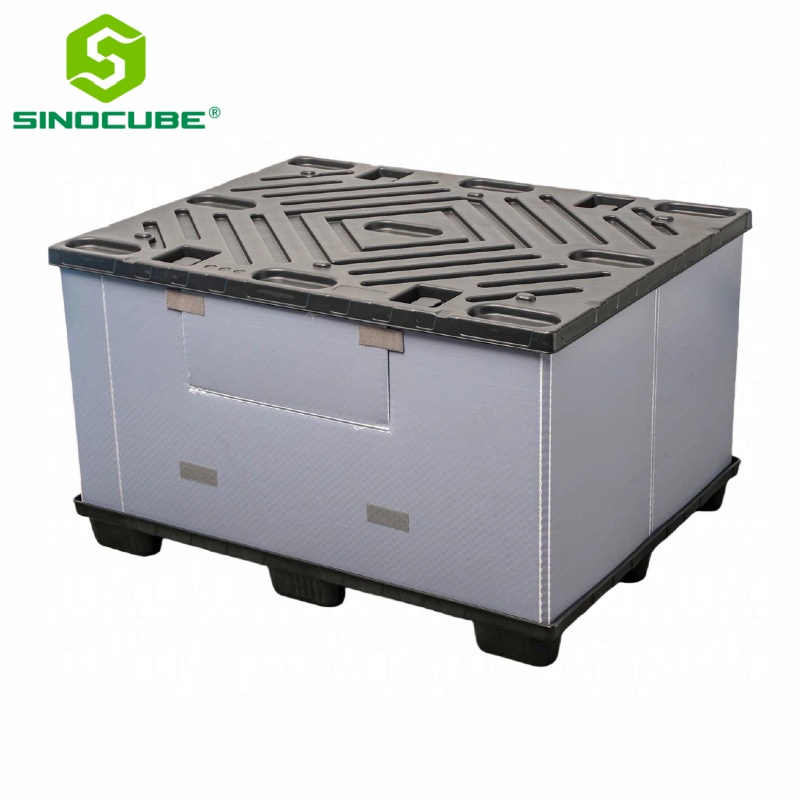
The modern supply chain operates on principles of efficiency, durability, and cost optimization. Plastic containers have emerged as a cornerstone solution across numerous industries, transforming how goods are stored, transported, and managed throughout distribution networks. Understanding which sectors derive the greatest advantage from plastic containers helps businesses make informed decisions about their logistics infrastructure and operational strategies.

Industries across manufacturing, food distribution, pharmaceuticals, and retail have fundamentally reshaped their supply chains by integrating plastic containers into their logistics operations. These solutions provide stackability, durability, and environmental benefits that traditional materials simply cannot match. The strategic adoption of plastic containers directly influences warehouse efficiency, transportation costs, and product safety standards.
Food and Beverage Industry Applications
Cold Chain Distribution and Perishable Management
The food and beverage sector represents one of the most critical adopters of plastic containers in modern supply chain management. Perishable goods require controlled environments, and plastic containers excel at maintaining product integrity while enabling temperature-controlled logistics. Frozen foods, fresh produce, dairy products, and prepared meals all depend on plastic containers to preserve quality from manufacturing facilities to retail shelves and consumer homes.
Plastic containers offer superior insulation properties compared to traditional wooden crates or cardboard boxes. Food distributors benefit from the ability to stack plastic containers efficiently without product damage or degradation. The seamless compatibility between plastic containers and refrigerated transport systems makes them indispensable for cold chain operations. Additionally, plastic containers resist moisture and contamination, meeting stringent food safety regulations while reducing waste throughout the distribution process.
Bulk Storage and Consolidation
Large-scale food operations rely on plastic containers for centralized warehouse consolidation and cross-docking facilities. These plastic containers accommodate various product sizes and weights while maintaining uniform handling standards. Retailers benefit from the standardization that plastic containers provide, enabling faster unloading, sorting, and shelf placement. The consistent dimensions of plastic containers simplify inventory tracking and reduce labor costs associated with manual handling.
Pharmaceutical and Healthcare Logistics
Compliance and Product Protection
Pharmaceutical companies and healthcare distributors depend on plastic containers to maintain strict compliance with regulatory standards and product integrity requirements. Medications, medical devices, and diagnostic materials require protective environments that plastic containers reliably deliver. The sealed nature of many plastic containers prevents contamination, moisture infiltration, and temperature fluctuations that could compromise pharmaceutical efficacy.
The pharmaceutical industry benefits from plastic containers because they enable traceability throughout the supply chain. Serial number labeling, temperature monitoring, and chain-of-custody documentation integrate seamlessly with plastic container systems. This capability is essential for products requiring refrigeration or protection from light exposure. Hospitals, clinics, and distribution centers depend on plastic containers to organize complex inventory systems while maintaining the highest safety and quality standards.
Emergency Response and Surge Capacity
During health crises or supply emergencies, plastic containers provide the flexibility and rapid deployment capabilities that healthcare systems require. Vaccines, antibiotics, and critical medical supplies can be quickly organized and transported using standardized plastic containers. This capability proved invaluable during pandemic responses when healthcare logistics demanded unprecedented scaling and rapid redeployment of resources. Plastic containers enable temporary storage solutions and emergency distribution networks that traditional packaging cannot support.
Retail and E-Commerce Distribution Networks
Fulfillment Center Operations
Modern e-commerce and retail operations depend on plastic containers to streamline warehouse and fulfillment center operations. Thousands of items moving through distribution centers daily require organization systems that plastic containers provide. The ability to use plastic containers for sorting, staging, and staging areas significantly reduces fulfillment times and labor costs. Retail companies benefit from the space-saving properties of collapsible plastic containers when managing peak season demand cycles.
Plastic containers facilitate the complex logistics of omnichannel retail where products must be organized for store shipments, online orders, and regional distribution simultaneously. The standardized dimensions of plastic containers enable efficient conveyor system integration and automated sorting processes. Retailers achieve faster order processing and reduced shipping times by organizing inventory in purpose-designed plastic containers throughout their distribution networks.
Last-Mile Delivery Efficiency
Delivery services and logistics providers utilize plastic containers to organize shipments for efficient route optimization and customer delivery. The durability of plastic containers withstands repeated handling during loading, transport, and unloading cycles. Customers receive products in better condition when plastic containers protect contents throughout the delivery process. Returns processing becomes more efficient because plastic containers can be reused for reverse logistics and refurbishment operations.
Manufacturing and Industrial Sectors
Component Storage and Production Lines
Manufacturing facilities integrate plastic containers into production workflows for component organization, work-in-process staging, and finished goods storage. Automotive suppliers, electronics manufacturers, and assembly operations all depend on plastic containers for maintaining production efficiency and quality standards. The ergonomic design of plastic containers reduces worker fatigue while enabling faster access to components and assembly materials during production cycles.
Factories benefit from plastic containers because they organize complex inventory systems on production floors while maximizing space utilization. Just-in-time manufacturing systems rely on plastic containers to deliver components at precise moments when production lines require them. The compatibility between plastic containers and industrial automation systems enables seamless integration with conveyor systems, robotic handling equipment, and warehouse management software.
Cross-Docking and Regional Distribution
Manufacturing companies utilize plastic containers in cross-docking operations where products transition from production facilities to distribution centers and ultimately to end customers. The standardization that plastic containers provide streamlines handoff procedures between different logistics partners and distribution facilities. Supply chain managers benefit from the visibility and tracking capabilities that plastic containers enable across complex multi-facility networks.
FAQ
Which industries see the highest return on investment from adopting plastic containers?
Food and beverage distribution, pharmaceutical logistics, and e-commerce fulfillment generate the highest returns from plastic containers because they operate high-volume, time-sensitive supply chains where efficiency directly translates to cost savings. Retailers benefit from faster inventory turnover while food companies reduce product loss and contamination. Pharmaceutical companies achieve regulatory compliance and safety standards that justify significant infrastructure investment in plastic container systems.
How do plastic containers improve supply chain sustainability compared to traditional packaging?
Plastic containers enable reusable logistics systems that eliminate single-use packaging waste throughout supply chains. Unlike cardboard boxes that degrade after several shipments, plastic containers withstand hundreds of handling cycles, dramatically reducing material consumption per shipment. Collapsible plastic containers return to distribution centers in compact form, reducing reverse logistics costs and transportation emissions. This circular approach to packaging makes plastic containers increasingly attractive to industries pursuing sustainability goals and carbon footprint reduction.
Can plastic containers integrate with existing warehouse management software and automation systems?
Yes, plastic containers are designed to work seamlessly with modern warehouse management software, barcode scanning systems, and automated material handling equipment. Most standardized plastic containers feature dimensions that align with existing conveyor systems and pallet configurations. RFID tags and tracking labels integrate easily into plastic container systems, enabling real-time inventory visibility across supply chains. This technological compatibility makes plastic containers practical for industries pursuing Industry 4.0 digital transformation initiatives.